
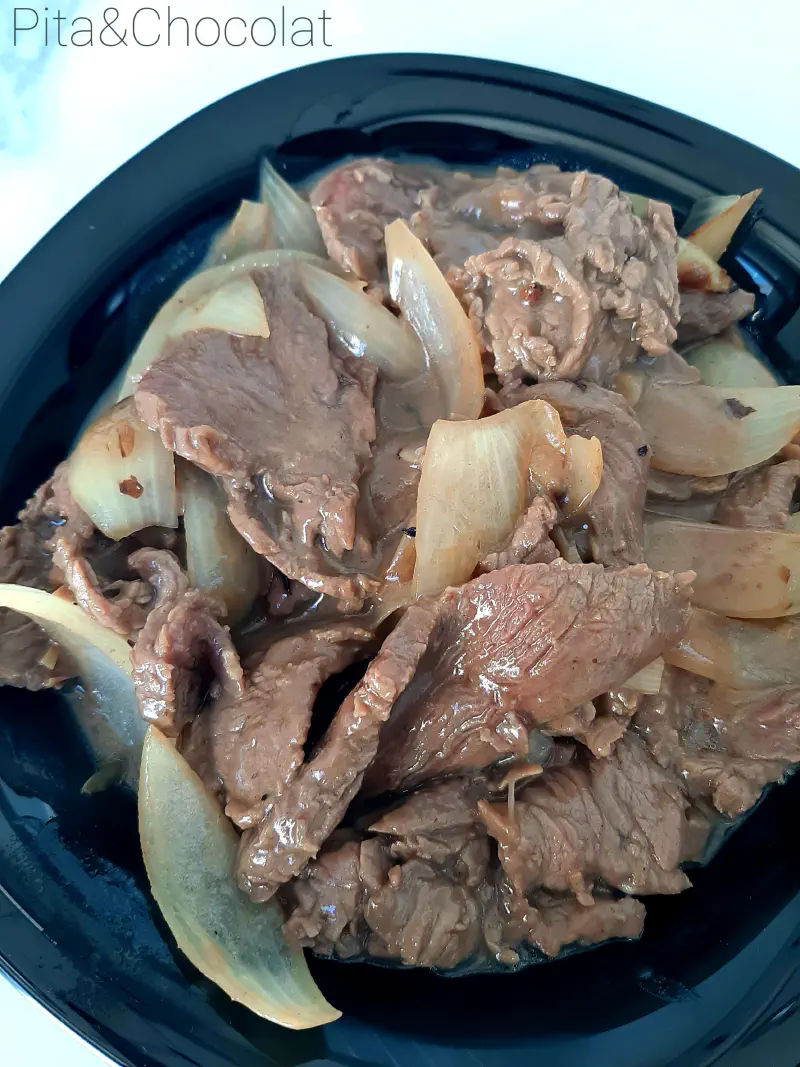
Ingredients
Check off ingredients as you go
Serves 6
- 600g (1.3 lbs) beef thinly sliced into strips (flank steak, tenderloin, ribeye, or sirloin)
- 2 large yellow onions, sliced
For the marinade
- 2 small garlic cloves, finely minced (or 2 tbsp garlic powder)
- 1 cm (½ inch) fresh ginger, finely minced
- 3 tbsp vegetarian oyster sauce substitute (also called mushroom soy sauce, or regular soy sauce as a substitute)
- A few Sichuan peppercorns (or crushed black pepper)
- 2 tbsp soy sauce
For cooking
- 3 tbsp neutral oil (sunflower)
- 1 level tbsp cornstarch dissolved in 3 tbsp water
Since I don’t eat seafood, I’m sharing a version of beef and onions without oyster sauce (replaced with a vegetarian substitute).
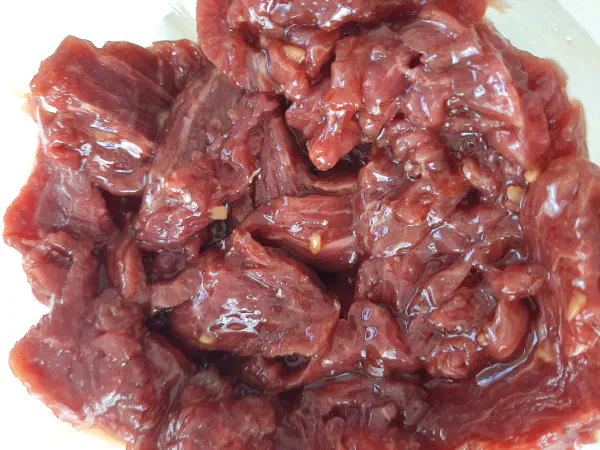
- In a mixing bowl, combine the oyster sauce substitute, soy sauce, garlic, pepper, ginger, and beef. Mix well to coat the meat, then refrigerate for half an hour.
Slice the onions into small wedges.
In a very hot wok or skillet, add the sunflower oil and stir-fry the onions. When they’re nicely seared, add the beef just until it changes color (no longer to keep it tender) and mix well. Pour in the cornstarch previously dissolved in 3 tbsp water. Mix again and transfer to a serving dish.
Beef and onions is excellent served with stir-fried vegetables, an Asian vegetable stir-fry, stir-fried noodles, or rice.
Tips and Variations
- For the marinade, you can optionally add a pinch of baking soda, which tenderizes the meat.
- You can add chopped Thai basil when serving, if you have some.
- Don’t add salt as the sauces are already quite salty.
- For the oyster sauce substitute, I find it in Israel in the Asian section. It’s sometimes called ‘Hoi stir sauce,’ sometimes mushroom soy sauce. This sauce really gives the same taste as Chinese restaurant dishes.
To learn all about beef cuts in Israel and their uses, check out my guide to meat in Israel