

Ingredients
Check off ingredients as you go
Makes 15 large blinis
- 250 g (2 cups) all-purpose flour (plain flour), sifted
- 300 ml (1¼ cups) milk
- 5 g (1½ tsp) active dry yeast
- 2 large eggs
- 1/2 tsp fine salt
- 2 Tbsp neutral oil or 30 g (2 Tbsp) melted butter
Blinis are a must for holidays, cocktail parties and buffet dinners. The difference between blinis and pancakes is the leavening. Blinis are made with yeast, which gives them a fluffiness quite different from pancakes, which are made with baking powder.
You would think that in a country like Israel, home to more than a million people from Russia and its neighbors, you’d find blinis in every supermarket. And yet I’ve never seen them here. So here is an easy, excellent recipe for making them at home.
Making the blini batter
In a large bowl, mix the milk (barely lukewarm, if you like) and the yeast, and let it stand for 5 minutes. Add the oil or melted butter, then the flour and salt. Whisk until you have a smooth, lump-free batter.
Separate the eggs. Gently fold the yolks into the batter. Set the whites aside until the batter has rested. Cover and let the batter rest for 1½ to 2 hours at room temperature. It should have thickened and show small bubbles on the surface.
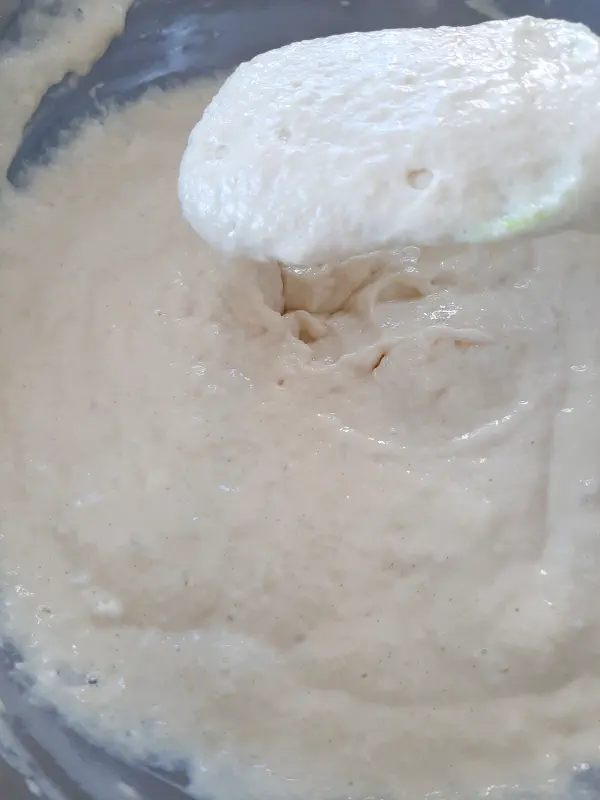
Once the time is up, beat the egg whites to soft peaks, then fold them in gently to keep the air. The batter should be nice and thick, full of bubbles and slightly wobbly when you move the bowl.
Cooking the blinis
- In a small, lightly oiled nonstick skillet over fairly high heat (I set my induction cooktop to 6-7), drop in a small amount of batter, depending on the size of blinis you want, and quickly spread it with the back of the spoon to form an even blini. Use fairly little batter, as they puff up. For a large blini, count about 2/3 of a ladle; for a mini blini, about 1 Tbsp of batter.

I like to make big ones and serve them stacked in twos, as a main course with smoked fish and dill cream.
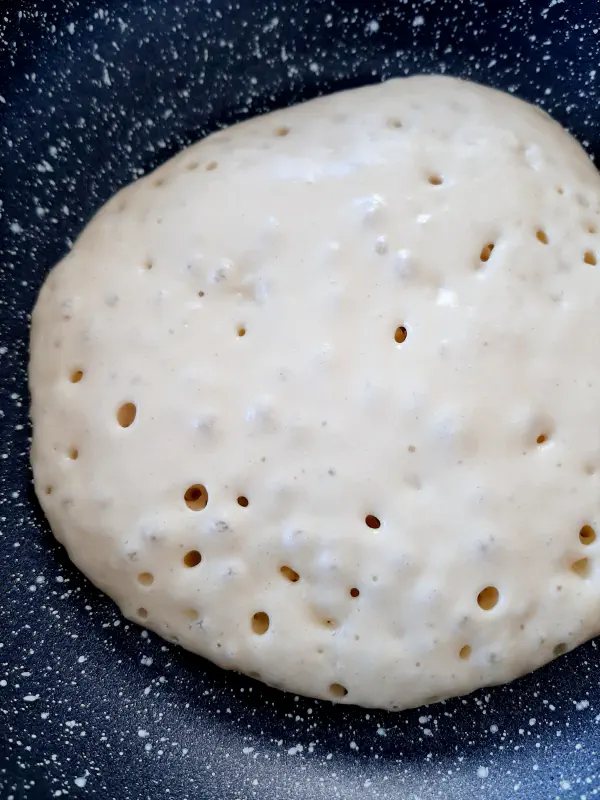
Cook until the edges are set and the surface is covered with small bubbles. Flip gently and cook for about 30 seconds more on the other side. The blinis should be lightly golden but stay very soft inside. Don’t overcook them, or they’ll dry out. Transfer them to a plate as you go and cover with a clean kitchen towel to keep them soft.
Serve with salmon, and why not a [gorgeous gravlax salmon](/recettes/saumon-marine-gravlax, crème fraîche, smoked fish, fish roe, dill, taramasalata, cucumber or fish rillettes (a spreadable fish pâté). For a vegetarian version, think tapenade, avocado, cucumber with dill, beets or tzatziki.
Here they are in both white flour and whole wheat versions

Tips
These blinis freeze perfectly! Don’t hesitate to double the quantities so you always have some to pull out of the freezer! Let them cool completely, then freeze them, separated into small stacks if you like. All you’ll have to do is thaw them in the fridge, then warm them briefly in a skillet or the microwave, and they’ll be as good as fresh!
When I double the recipe I get 20 large and 20 small ones.
Beyond the classic salmon, fish roe, taramasalata, tuna rillettes and other smoked fish, for a vegetarian version you can serve them with tapenade, avocado, cucumber with dill, sliced beets, tzatziki…
For a lactose-free version, you can replace the milk with soy milk.
Blinis are also excellent made with a mix of white flour and whole wheat or buckwheat flour; you’ll just need to add a bit more water (or milk) so the batter isn’t too thick.
Make herb blinis by adding a few chopped fresh herbs to the batter, such as chives or dill.
If you use whole wheat flour, increase the milk to 320-330 ml (1⅓ cups) as it absorbs more liquid. If you mix 150 g (1¼ cups) whole wheat and 100 g (¾ cup) white flour, 310 ml (1¼ cups + 1 Tbsp) milk will be enough. You can also mix the flour, milk and yeast and wait 20 minutes (this is called an autolyse) before adding the egg yolks, salt and fat, then let it rise for 2 hours and carry on as directed in the recipe.