
Ingredients
Check off ingredients as you go
For 1 large pissaladière (30x40cm / 12x16 inches)
For the dough
- 250g (2 cups) flour (white or half whole wheat)
- 10g fresh yeast (or 4g / 1¼ tsp dry yeast)
- 1 tbsp sugar (optional)
- 1 tsp salt (5g)
- 60-80ml (¼-⅓ cup) olive oil
- 160ml (⅔ cup) lukewarm water
For the topping
- 1.3 kg (3 lbs) onions (about 6 large, before peeling)
- 12 anchovy fillets in oil
- about 10 small black olives
- 2-3 sprigs of thyme
- 1 bay leaf
- 1 garlic clove (optional)
- 1 tbsp sugar (preferably brown)
- a drizzle of balsamic vinegar (optional)
- olive oil
- Salt, pepper
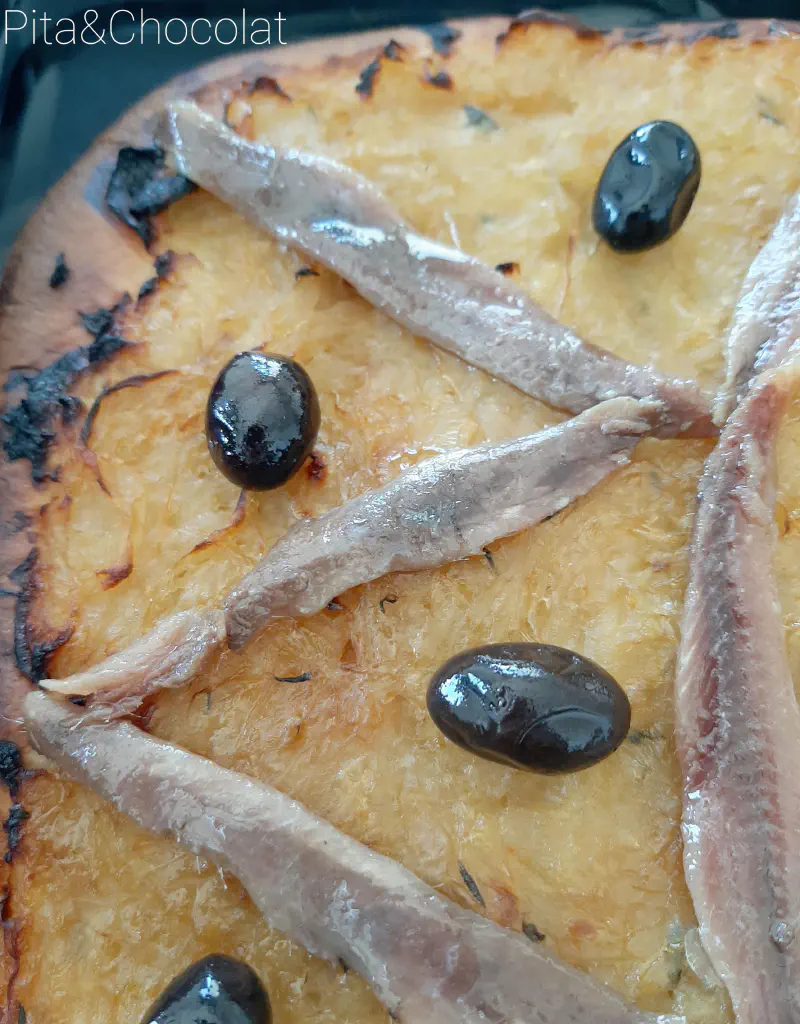
Pissaladière, the famous Niçoise onion tart, gets its name from pissala, a mixture of anchovy and sardine purée in olive oil that was spread on the dough. Unlike a classic tart, pissaladière is made with a thick bread dough very similar to Tunisian pizza. The topping consists of caramelized onions flavored with thyme and bay leaf. Black olives and anchovies are added to taste.
Preparing the dough
- Dissolve the yeast in barely warm water with the sugar (the sugar will feed the yeast). Mix and let rest 10 minutes, until foam forms.
- In a bowl or stand mixer, combine the flour, salt, oil, then the water and yeast mixture. Knead for about 10 minutes until the dough is smooth and homogeneous. Form a ball, cover and let rest 1 hour in the turned-off oven or until the dough doubles in volume.
Time-saving tip: When I make this dough, I always double the quantities to freeze one after rising, wrapped tightly in a freezer bag for example. You can then prepare another pissaladière or a Tunisian pizza.
Preparing the topping
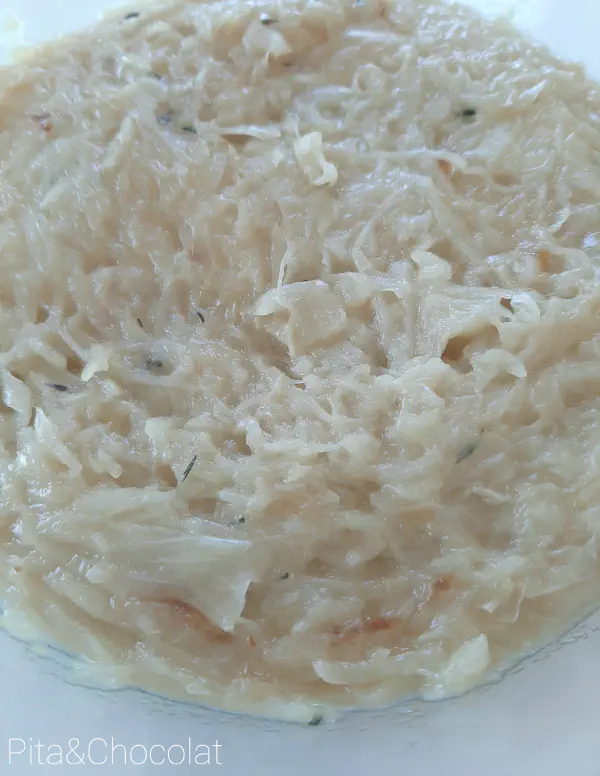
Peel and thinly slice the onions. Heat 2 tbsp olive oil in a sauté pan, add the onions, season with salt and pepper.
Add the thyme, bay leaf (and garlic if using) and cook over medium heat for about ten minutes, lower to low heat, if needed add 1 small glass of water so it cooks without sticking. Cover. When the onions are soft and translucent, add the sugar and drizzle of vinegar. Turn off the heat and remove the thyme sprigs and bay leaf. There may be some liquid left, that’s fine: remove the excess without pressing too much so the onions don’t dry out, they will reabsorb some liquid as they cool.
Shaping the pissaladière
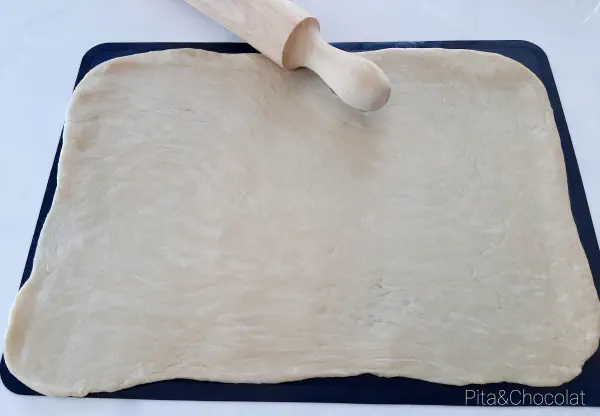
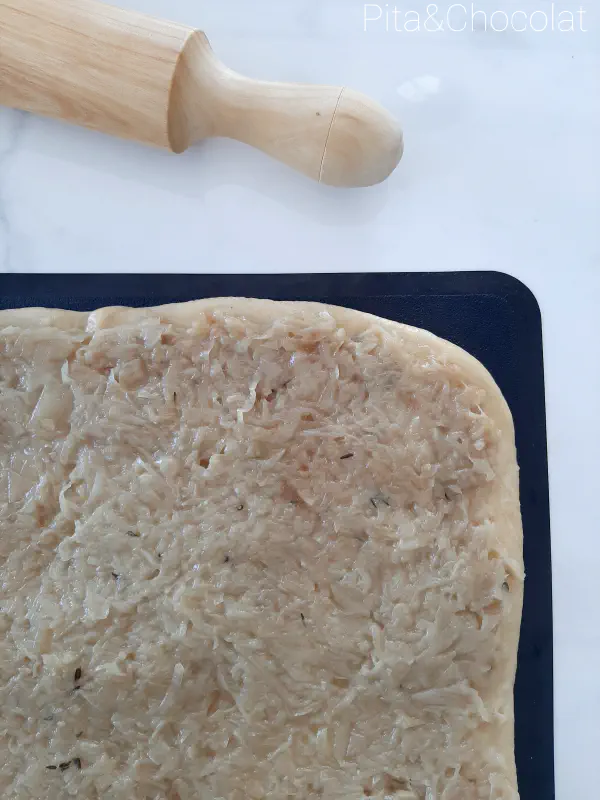
- Preheat the oven to 200°C (400°F) (convection) (or 220°C/425°F conventional heat). Roll out the dough on a baking sheet lined with parchment paper (if you have it, spread with pissala), let it relax 15 minutes then top with the onions, smoothing with the back of a large spoon so they’re evenly distributed. Drizzle with olive oil.
Bake in the middle of the oven for about 25 minutes, until the edges are golden and crispy.
When out of the oven, arrange the anchovies in a crisscross pattern and decorate with black olives.
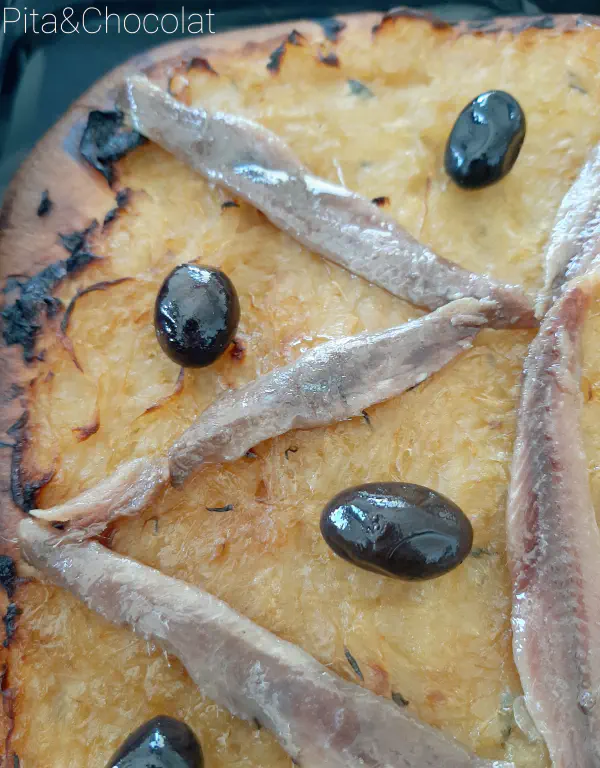
To serve, cut into large squares and arrange on a serving platter. Pissaladière is eaten warm or cold.
Tips and variations
Add the anchovy fillets when out of the oven to prevent them from drying out. You can also, as in the most traditional version, make a small anchovy purée with olive oil and spread it on the dough before adding the onions.
Some people use tuna instead of anchovies.
For a vegan version, use only pitted black olives.
Pissaladière can be prepared ahead and refrigerated. You’ll only need to reheat it in the oven for about ten minutes to restore its crispiness.
For a less traditional and more brioche-like version, replace part of the water with milk.
I’ve reduced the oil and water and find the result equally satisfying. I’ve kept the original proportions, you decide.