
Ingredients
Check off ingredients as you go
Serves 6
- 1.2 kg (2.6 lbs) tender beef cut into chunks (shank, chuck, or cheek)
- 2 onions, sliced
- A few sprigs of parsley
- 2-3 peeled and grated tomatoes or 50g (3 tbsp) quality tomato paste
- 1 tsp sweet paprika
- 1 tsp turmeric
- 6 handfuls of white beans such as navy beans, about 250g (1¼ cups) (soaked overnight)
- 1 tsp harissa (to taste)
- 3 tbsp neutral oil (sunflower)
- Salt, pepper
The night before, soak the white beans in a large volume of water.
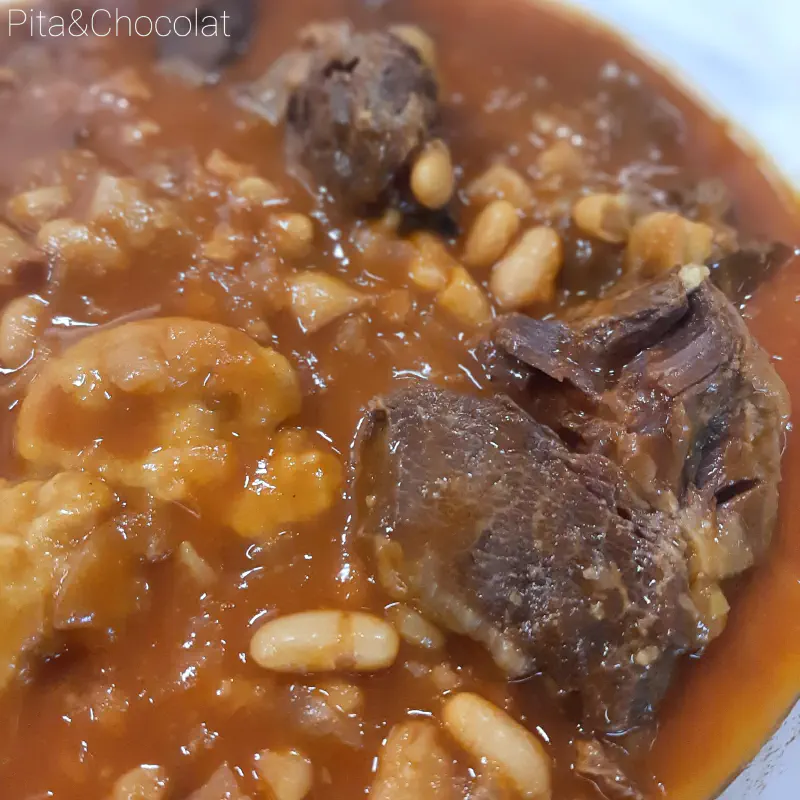
In a Dutch oven or pressure cooker, heat the sunflower oil and sauté the sliced onions for 5 minutes, stirring regularly. Add the beef chunks. Add the paprika, turmeric, grated tomatoes (or tomato paste), beans, and cover with water just above the level of the ingredients. Close the lid and cook under pressure for about 1 hour (cook longer in a regular pot, until the meat and beans are tender). You should end up with a thick, velvety sauce with almost no liquid.
As a bonus, if you like, you can make small dumplings that cook in your sauce. Called “koukla,” they’re traditionally added to Loubia, and some add them to wheat tfina harissa. To make them, simply mix 2 eggs with 150g (1 cup) flour (or fine semolina), spices to taste (cumin, paprika, garlic), form small quenelles, and add them to cook with your loubia. You’ll need a bit more liquid as these dumplings need it to cook and puff up.
Psal ou Loubia is typically served with couscous as a side and Italian bread or challah—everyone can choose how they want to eat it.
Tips and Variations
- Like all slow-cooked dishes, it will be even better reheated the next day, making it an ideal Shabbat dish.
- There’s a variation of this dish called Loubia bel camoun, meaning with cumin—simply add a level tablespoon of cumin at the end of cooking.
- Finally, another variation: if you add slices of previously fried eggplant during the last half hour of cooking, the dish is then called Derbali.