
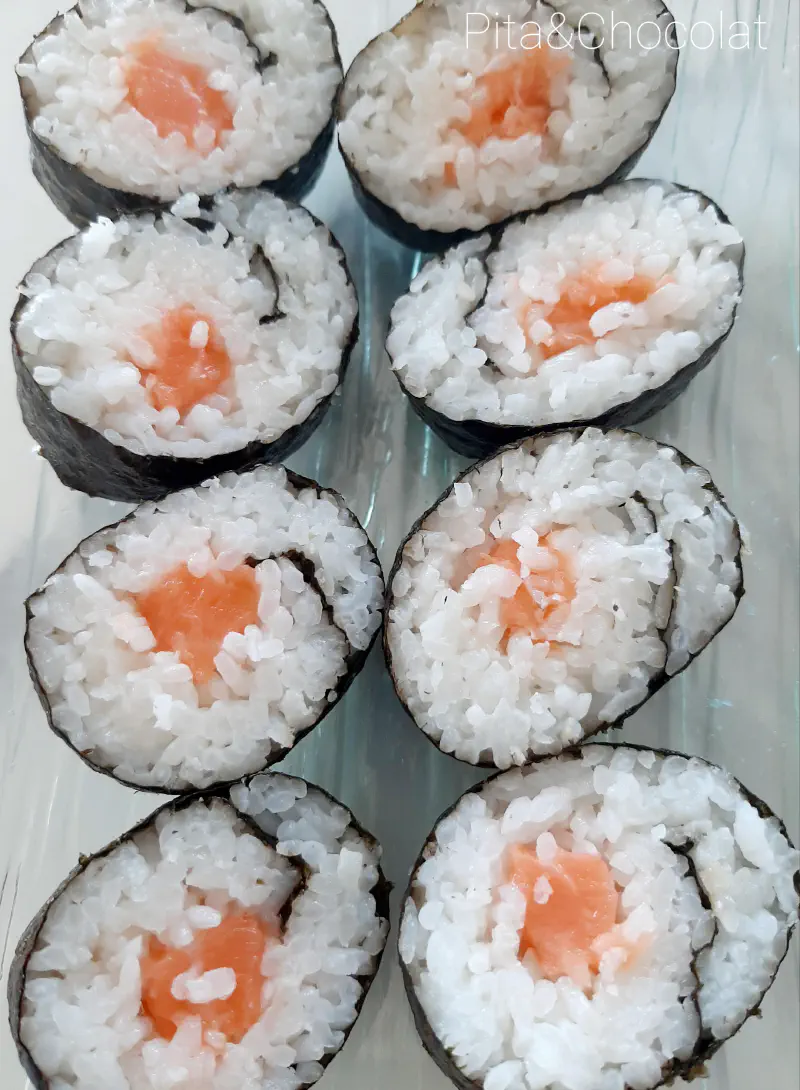
Ingredients
Check off ingredients as you go
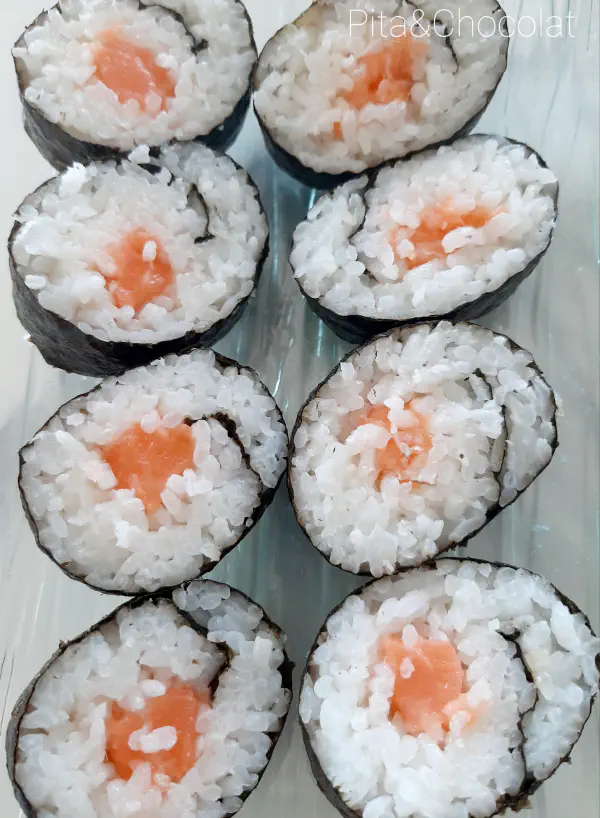
Makes 8 maki
- 50 g (¼ cup) short-grain sushi rice (see the basic recipe)
- 2 Tbsp rice vinegar
- 1/2 Tbsp sugar
- 1 pinch salt
For the filling
- 1 slice (1 cm / ½ inch thick) cut from a fresh salmon fillet
🍣 🥢 For more sushi ideas, I wrote a full article on sushi variations that I invite you to check out.
Making the sushi rice
Quick recap: whatever quantity of rice you make, keep the classic ratio in mind, which is 1 volume of rice to 1.3 volumes of water. If you’re using glasses, for example, that’s 1 glass of rice to 1 + 1/3 glasses of water.
Rinse the rice well until the water runs clear (at least 4 times). Put the rice and water in a saucepan, cover and bring to a boil, stir once, then lower to medium heat and cook for 12 minutes. Turn off the heat and, without lifting the lid, let it rest for 10 minutes.
While the rice rests, put the rice vinegar, sugar and salt in a small saucepan. Bring to a boil to dissolve everything.
Transfer the rice to a large bowl and pour in the still-hot vinegar, mixing gently to season the rice. Let it cool to room temperature (never in the fridge), covered with a kitchen towel so it doesn’t dry out.
Rolling the salmon maki
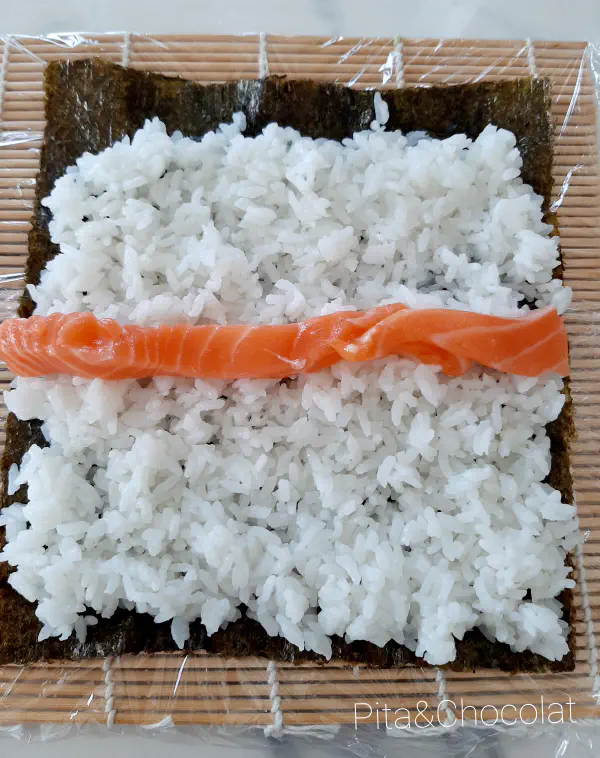
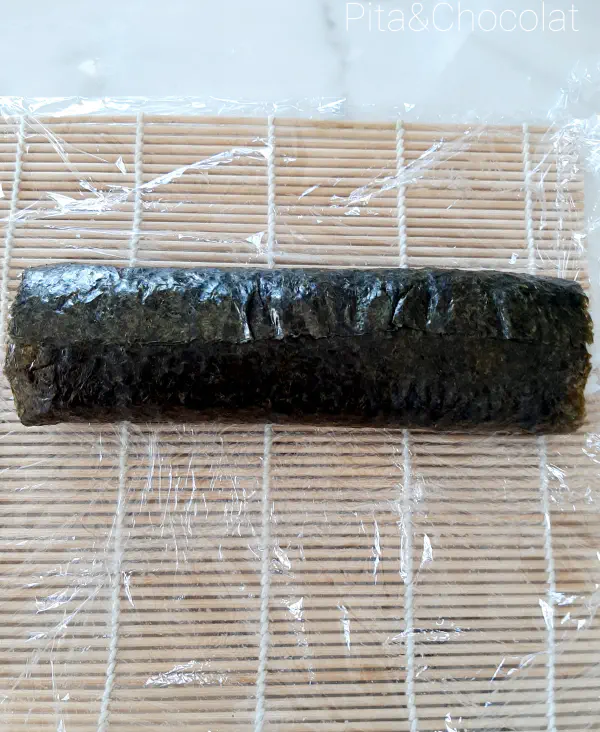
- Lay the nori sheet shiny side down on the bamboo mat (which you’ve covered with plastic wrap), then spread a thin layer of rice (0.5 cm / ¼ inch thick) over the whole sheet except for a 1 cm (½ inch) strip along one edge. Place the strip of fish in the middle, then roll up tightly, holding the fish in place with your fingers so it stays right in the center.
Tips and variations
Nori sheets are fairly large and give rather big maki once rolled. If you’d like smaller maki, you can cut off 1/3 of the nori sheet and make the roll with the remaining 2/3.
If you have rice left over, you can make some salmon sushi 🍣.
You can switch up the fish, add cream cheese, or a strip of avocado or cucumber alongside or instead of the fish to make vegetarian maki.