
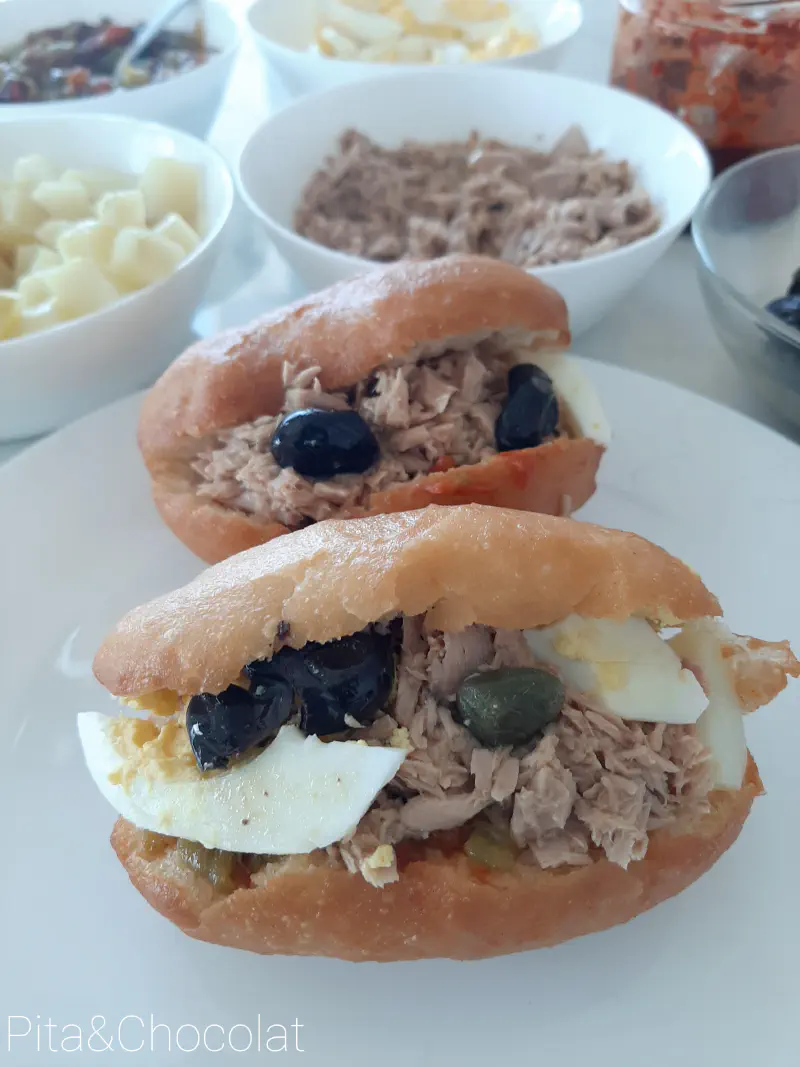
Ingredients
Check off ingredients as you go
For the fricassé dough
- 1kg (8 cups) sifted flour
- 2 tablespoons dry baker’s yeast (or 20g fresh yeast)
- 480ml (2 cups) lukewarm water
- 100g (½ cup) sugar
- 1 egg
- 1 level tablespoon fine salt
- 120ml (½ cup) neutral oil
For the filling
- 4 hard-boiled eggs
- 3 cans flaked tuna
- 5 potatoes, cooked and cubed
- capers (optional)
- harissa
- mechouia salad (2 grilled bell peppers and 4 grilled tomatoes)
- black or green olives, halved
- preserved lemons, finely sliced (optional)
Makes 20 large fricassés
- Dissolve the yeast in part of the barely warm water with a teaspoon of sugar (the sugar feeds the yeast). Mix and let rest for about 10 minutes until foam forms.
- In the bowl of a stand mixer, put the flour, egg, remaining water, then add the sugar, oil, and salt. Add the yeast and knead well for about 10 minutes. You should get a smooth, supple dough that’s easy to work with and barely sticky. If the dough is too sticky, add a little flour. Cover with plastic wrap or a clean kitchen towel and let rise in a warm place for 2 hours or until the dough doubles in volume.
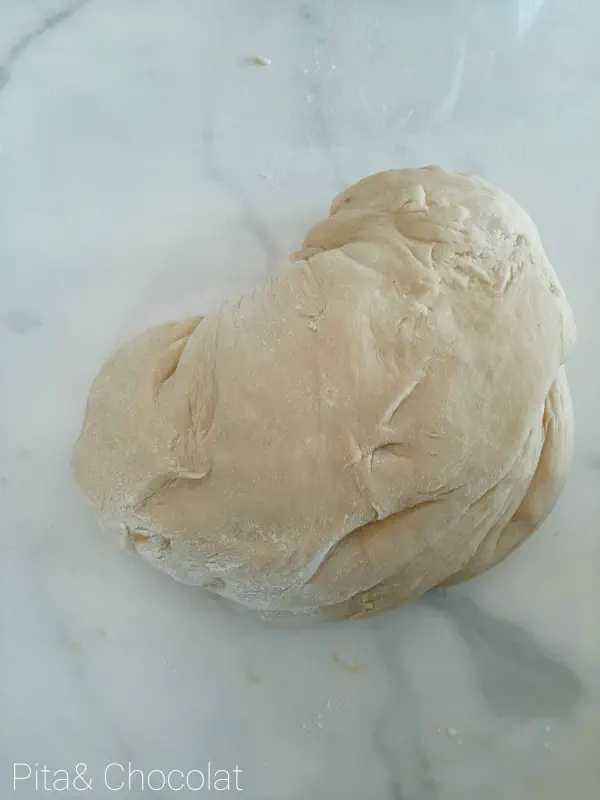
Dough ball - Tunisian fricassé dough preparation
For the Tunisian fricassé filling
- Arrange in different small bowls to make assembly easier.
- Potato salad Boil potatoes with their skin in a pot of water. When cooked (knife blade comes out easily), peel them, cut into small cubes, and set aside.
- 4 hard-boiled eggs Boil eggs in a small pot of lightly salted water (salt makes peeling easier), peel them, cut into small wedges, and set aside.
- 500g (18 oz) flaked tuna in water with a drizzle of olive oil.
- mechouia salad - grilled bell peppers and tomatoes Cut peppers in half to remove seeds, place under the broiler with tomatoes for about 35 minutes. Remove skins then chop everything with a knife, adding a drizzle of olive oil, salt, garlic, and set aside.
- Prepare green or black olives cut in half, capers, and finely sliced preserved lemon without the pulp, if using.
- harissa (hot sauce).
- Lightly flour your work surface. The dough should be very pleasant to work with. Form fricassés of 40g (1.4 oz) for appetizer size or about 90g (3.2 oz) for large size. Let rise another 30 minutes.
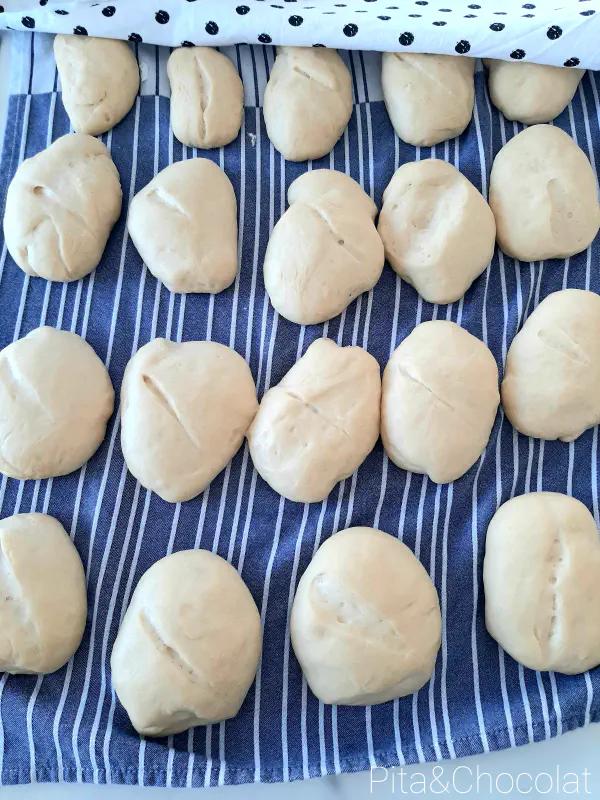
Dough balls - Tunisian fricassé bread preparation
Frying the Tunisian fricassés
- For frying, a few tips: the ideal temperature is around 160-180°C (320-350°F) - this allows cooking without the fricassés absorbing too much oil. You need an oil bath about 10cm (4 inches) deep for proper cooking. To maintain temperature, don’t fry too many fricassés at once (I cook them 2 at a time, at setting 6 on the induction cooktop). Cook about 2-3 minutes per side and place on paper towels.
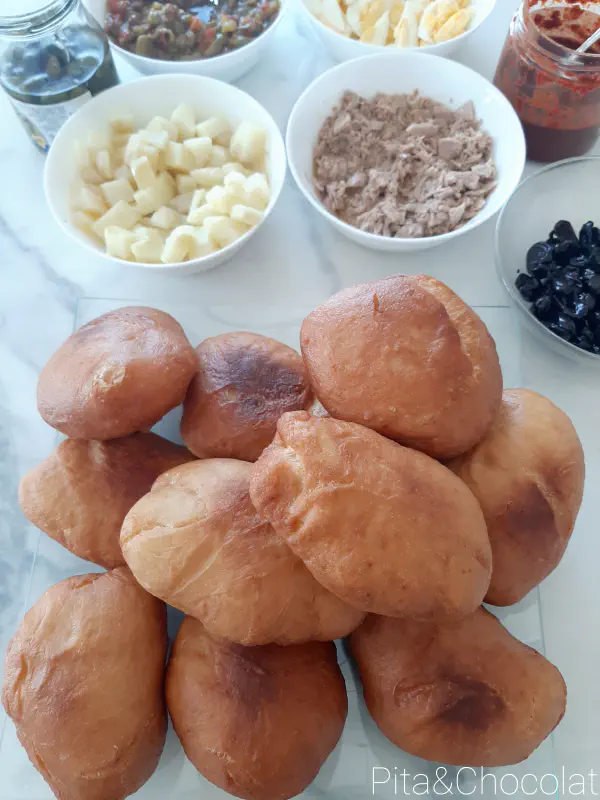
Fried bread - Tunisian fricassé
Assembling the fricassés
- Cut the fricassé lengthwise (but on one side only), like a sandwich. Add harissa, mechouia salad, potato salad, eggs, tuna, capers, black olive, and lemon. You can add more harissa at the end if you like it spicier.
Tips and time management
For a mini version, with these quantities, you can easily make about 50 pieces (count about 25-30g per piece).
You can freeze the fried, unfilled fricassés in containers to prevent damage.
The longest part of making fricassés is preparing the fillings. I recommend preparing these while the dough rises - you’ll save a lot of time. You’ll only need to assemble when your breads are ready.
This dough is also excellent for making Challah, the braided Shabbat bread - you’ll bake them instead of frying.
A little tip for controlling your frying: put a small piece of raw carrot in the oil - it won’t blacken and you can monitor the temperature. There should be small bubbles around the carrot. You can change the carrot during cooking if needed.