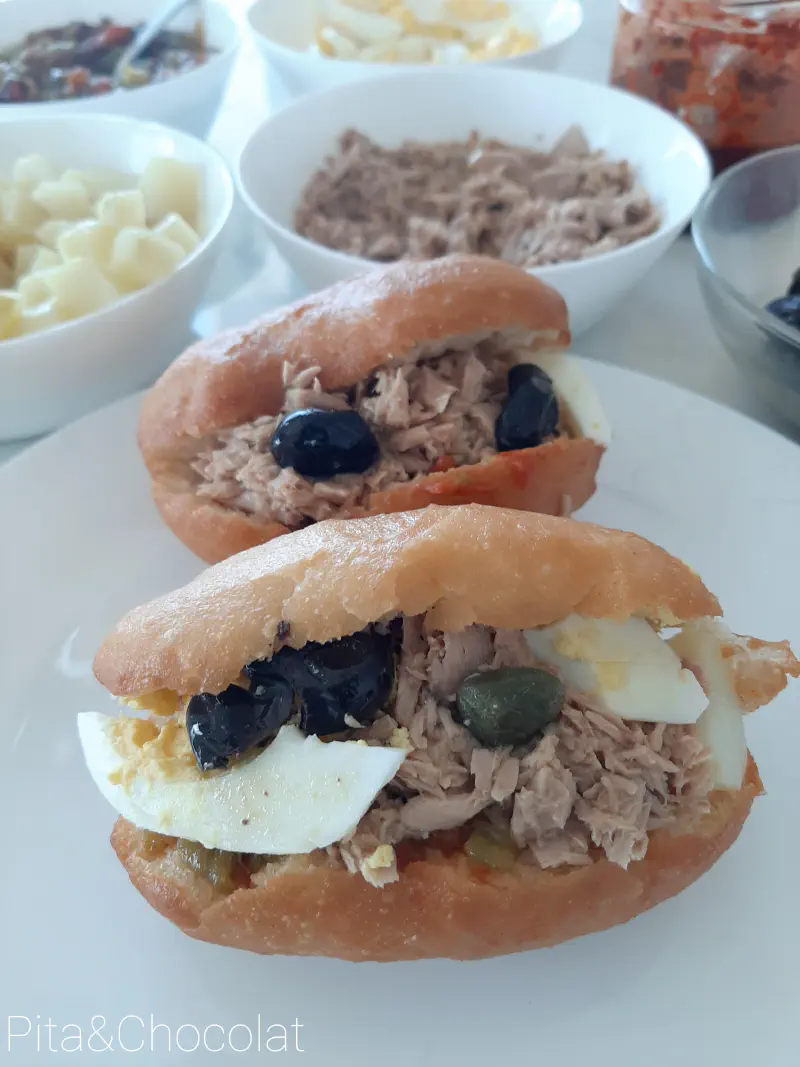
Tunisian Fricassé - Fried Sandwich Rolls with Tuna, Egg and Harissa
Breads Appetizer Buffet Kemias Tunisian cuisine Freezable Make-ahead Jewish cuisine Tuna Lunch box Yitro

Tunisian Fricassé - Fried Sandwich Rolls with Tuna, Egg and Harissa

Here is a must of Tunisian cooking: fricassés. They are sandwiches made with fried bread, like savory doughnuts, filled with tuna, hard-boiled eggs, olives, and cooked and fresh salads. Sounds heavy? Give them a try, they are always a hit, especially in mini size for your buffets and cocktail parties!

Tunisian Pizza - Thick, Soft Crust with Tuna, Egg and Olives, No Cheese
Appetizer Kemias Tunisian cuisine Pizza Tuna Buffet Summer Lunch box Shabbat Seudah shlishit Yitro

Tunisian Pizza - Thick, Soft Crust with Tuna, Egg and Olives, No Cheese

A pizza with a thick, soft crust. You can vary the topping to suit your mood; what makes it special is that it’s a pizza without cheese. I’ve listed as suggestions the most traditional toppings and the ones we love. Naturally kosher and parve.

Minina (Tunisian Chicken Frittata) - Savory Egg and Chicken Cake
Kemias Jewish cuisine Tunisian cuisine Chicken Eggs Buffet Make-ahead Kids Batch cooking Passover Rosh Hashanah Yitro

Minina (Tunisian Chicken Frittata) - Savory Egg and Chicken Cake

Here is a specialty of Tunisian Jewish cooking that goes wonderfully with your chicken broth. Minina is a kind of savory egg and chicken cake, cooked in a water bath, which gives it an unmatched tenderness. I’m sharing our family recipe for a classic Minina.

Homemade Bagels - New York Style Bagels
Street food Appetizer Jewish cuisine Ashkenazi cuisine American cuisine Polish cuisine Breads Lunch box Basics Freezable Batch cooking Brunch Dinner buffet Yitro

Homemade Bagels - New York Style Bagels

Today I’m sharing a recipe for delicious homemade bagels that are easy to make. Bagels have become hugely popular over the past few years, from street food chains all the way to restaurants that have added them to their menus. Yet bagels are nothing new: they were brought to the United States by Ashkenazi Jews who made them back home, especially in Poland. What sets them apart is their ring shape and the fact that they are boiled before being baked, which gives them that texture unlike any other bread.